The Precisianist’s Preferred Puff
February 9, 2015
I was in Boots at the weekend to get my monthly supply of hangover cure – oops, there go my chances of working in the SBC – and I noticed that they sell e-cigarettes called Puritane. It was almost enough to make me start smoking…
The Soteriology of James Ussher: The Act and Object of Saving Faith
January 29, 2014

Now on sale.
“This is a well-designed, carefully documented and argued study of a major seventeenth-century British Reformed theologian whose work has been sadly neglected until very recently. Snoddy offers one of the most significant monographs on Ussher since the major biographical work of the nineteenth century. The book is a careful and balanced piece of work that sets Ussher into his historical context, deals with the relevant primary and secondary literature, and sheds significant light on Ussher’s thought. Snoddy’s work offers considerable new insight into the on-going reappraisal of theology in the early modern era, solidly contributing to the demolition of the so-called ‘Calvin against the Calvinists’ thesis.” –Richard Muller, P.J. Zondervan Professor of Historical Theology, Calvin Theological Seminary
“James Ussher was one of the most important Protestant theologians of the seventeenth century, whose writings exercised profound impact on the evolution of English puritanism even as his friendship and reputation were claimed by prominent defenders of the Catholic faith. In this exceptional work of historical theology, Richard Snoddy elucidates the thinking of a key but complex figure in the construction of Reformed orthodoxy.” –Crawford Gribben, Professor of Early Modern British History, Queen’s University, Belfast
“James Ussher was a seventeenth-century Irish polymath whose range and subtlety has posed a considerable challenge to those trying to explain and interpret his work. Richard Snoddy meets the challenge triumphantly in this study of Ussher’s theology of salvation. Not only does he place Ussher convincingly in his contemporary context, he also demonstrates the surprisingly diverse range of views on this important topic contained within seventeenth-century Calvinism.” –Alan Ford, Professor of Theology, University of Nottingham
Recreating the Early Modern Sermon
January 22, 2014
Recent scholarship on the early modern sermon has paid more attention to matters of venue, auditory, etc. The Virtual Paul’s Cross Project takes this to a whole new level. It attempts a virtual recreation of John Donne’s sermon on 5 November 1622 at Paul’s Cross, right down to bird-song and barking dogs. Worth playing around with to get an idea of what it would have been like to be there.

Owen Bibliography
October 31, 2013
A relatively complete bibliography for John Owen, hosted at the Centre for Early Modern Studies, Oxford.
Nailed
October 31, 2013
For Reformation Day. This won’t be to the taste of all my friends but I think it’s kickin!
Lyrics:
I’ve been working for my whole life to get to the other side
And try to achieve true righteousness
All the scourges and whips I cracked
The flesh I ripped off my back
It only led me to emptiness
Here I am, a broken man who’s done all that a man could do
And found that it’s only filthy rags
Monasteries, religious schools, indulgences, laws and rules
It all added up to nothing and darkness and death
Vanity, Heartache, and emptiness
Efforts all fading away
The flesh and defeat that it brings
‘Till You guide me and show me things
That my eyes have never seen before
As I burst forth from the belly of the beast
Never fight it anymore
For the burden on my life has been released
Nail it to the door
Nailed these ninety-five things I’ve learned
They’ll say that I must be burned
For God has no place for heretics
All the things that they try to sell
It’s trickery straight from Hell
To turn it into a den of thieves
See these madmen peddling the wares of dead men’s souls
Collecting on a debt already paid so long ago
There’s fire in my spirit, and fire in their eyes
For now they’ll want to burn me alive
Yet freedom rings
Unworthiness is all I bring
The blood of Christ is all I claim
This grace revealed everything
That my eyes have never seen before
As I burst forth from the belly of the beast
Never fight it anymore
For the burden on my life has been released
Nail it to the door
Coming soon: The Soteriology of James Ussher
August 26, 2013
Richard Muller on the Reformed Tradition
December 26, 2012
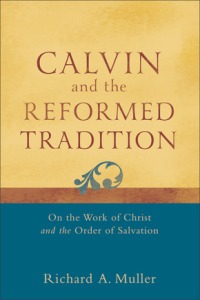
My copy arrived Christmas Eve. More exciting than anything Santa brought! Looks great.
New Collinson Book – Richard Bancroft and Anti-Puritanism
December 26, 2012
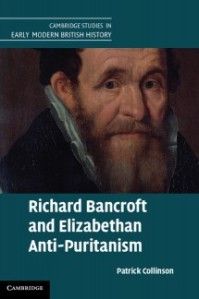
The last book by the late, great Patrick Collinson. Due imminently.
Owen and Thomism
April 19, 2012
I thought it would be worth posting a link to Christopher Cleveland’s doctoral thesis on Thomism in John Owen. I know how much Diatheke’s readers – both of you – like Owen. This has only recently become available online. You heard it here first!
It seems impossible to link directly to the relevant page, so this is how you get there:
Go to http://digitool.abdn.ac.uk
Select ‘Research Theses’
Then select ‘Divinity, History and Philosophy’
Then scroll through the pages. The thesis is on page 8 which is currently the last page.
I’d be interested to hear what you make of it.
Heavy Metal
July 27, 2011

I was in my local Sainsbury’s the other day and was intrigued to see that no less than 5 of the top 40 DVDs feature serious quantities of plate armour – five films set in the medieval or early modern periods or based on historical events in those periods.
- Ironclad
- Season of the Witch
- Army of Valhalla
- 1612
- Henry of Navarre
I usually enjoy this sort of thing. A couple of them look a bit silly but couldn’t be any worse than King Arthur. I had not been aware that there had been a recent movie about Henry of Navarre, the great Huguenot leader. From reviews on Amazon it seems that there is more action in the bedroom than the battlefield (shades of The Tudors) but they are generally positive about the film overall. I’ll try to watch it at some point this summer.
 διαθήκη